Z-Image Turbo vs FLUX.2 klein (4B and 9B) vs Qwen-Image
Z-Image Turbo is the 6B, 8-step, text-to-image-only model that fits in 16 GB. FLUX.2 [klein] does generation and multi-reference editing in one 4-step model, but only the 4B is Apache-2.0. Qwen-Image-2512 is a 20B model built for text rendering, with editing in a separate Qwen-Image-Edit-2511 checkpoint. All facts below come from each developer's own cards and docs.
At a glance
| Z-Image Turbo | FLUX.2 [klein] 4B | FLUX.2 [klein] 9B | Qwen-Image-2512 | |
|---|---|---|---|---|
| Developer | Alibaba (Tongyi-MAI) | Black Forest Labs | Black Forest Labs | Alibaba (Qwen) |
| Image model | 6B single-stream DiT | 4B rectified flow transformer | 9B flow model | 20B MMDiT |
| Text encoder | Qwen3 | Qwen3 4B | Qwen3 8B | Qwen2.5-VL |
| Steps (card example) | 9 steps, 8 forward passes | 4 | 4 | 50 |
| Guidance | 0, no CFG | 1.0 | 1.0 | true_cfg_scale 4.0 |
| Negative prompt | No | No (per BFL's FLUX.2 guide) | No (per BFL's FLUX.2 guide) | Yes |
| Editing | No | Yes, up to 4 references | Yes, up to 4 references | Separate model: Qwen-Image-Edit-2511 |
| VRAM (developer) | Fits in 16 GB | About 13 GB (README: about 8 GB) | About 29 GB, RTX 4090 and up | Not stated |
| Licence | Apache-2.0 | Apache-2.0 | FLUX Non-Commercial | Apache-2.0 |
| Undistilled base for training | Z-Image | [klein] Base 4B | [klein] Base 9B | Not distilled; train it directly |
| Released | Nov 2025 | Jan 2026 | Jan 2026 | Dec 2025 |
Text encoder sizes: BFL's launch post gives the 8B Qwen3 embedder for the 9B; the 4B's Qwen3 4B encoder is from musubi-tuner's FLUX.2 docs and matches the repo's config. Z-Image Turbo's and Qwen-Image's encoders are from the configs shipped in their Hugging Face repos.
Architecture and size
Z-Image Turbo uses what Tongyi-MAI calls a Scalable Single-Stream DiT (S3-DiT): text tokens, visual semantic tokens and image VAE tokens are concatenated into one sequence, which the card says is more parameter-efficient than dual-stream designs. It's distilled from the Z-Image base to 8 function evaluations.
FLUX.2 [klein] comes in two sizes, each published as a step-distilled model and an undistilled Base. The 9B pairs a 9B flow model with an 8B Qwen3 text embedder, so in practice it's a much heavier download than the name suggests. A third variant, [klein] 9B KV, adds KV caching; BFL's README describes it as faster than 4B for multi-reference editing.
Qwen-Image is a 20B MMDiT. 2512 is the December 2025 update of the August 2025 text-to-image model; editing lives in the Qwen-Image-Edit line, currently Edit-2511, also 20B.
On raw size, klein 4B is the smallest image model of the three and Qwen-Image the largest by a wide margin, about five times klein 4B and over three times Z-Image Turbo.
Steps, guidance and resolution
These are the settings each card's Diffusers example uses. They're the developers' starting points, not tuned values.
# Z-Image Turbo (ZImagePipeline)pipe(prompt, height=1024, width=1024, num_inference_steps=9, # 8 DiT forward passes guidance_scale=0.0) # must be 0 for Turbo# FLUX.2 [klein] 4B (Flux2KleinPipeline)pipe(prompt, height=1024, width=1024, num_inference_steps=4, guidance_scale=1.0)# Qwen-Image-2512 (DiffusionPipeline)pipe(prompt, negative_prompt=negative_prompt, width=1664, height=928, # 16:9 preset num_inference_steps=50, true_cfg_scale=4.0)| Model | Documented sizes |
|---|---|
| Z-Image Turbo | Card and repo default 1024 × 1024. The official demo has 1024, 1280 and 1536 tiers in eleven aspect ratios, up to 1536 × 1536 and 2048 × 1152. |
| FLUX.2 [klein] | The card's example is 1024 × 1024; the card doesn't state a maximum. |
| Qwen-Image-2512 | Seven presets: 1328 × 1328, 1664 × 928, 928 × 1664, 1472 × 1104, 1104 × 1472, 1584 × 1056, 1056 × 1584. |
Step count is the main cost difference when you self-host. klein runs 4 steps, Z-Image Turbo 8 forward passes, and Qwen-Image-2512 50 steps with true CFG. Qwen's README links Qwen-Image-Lightning, a third-party distillation, for fewer steps.
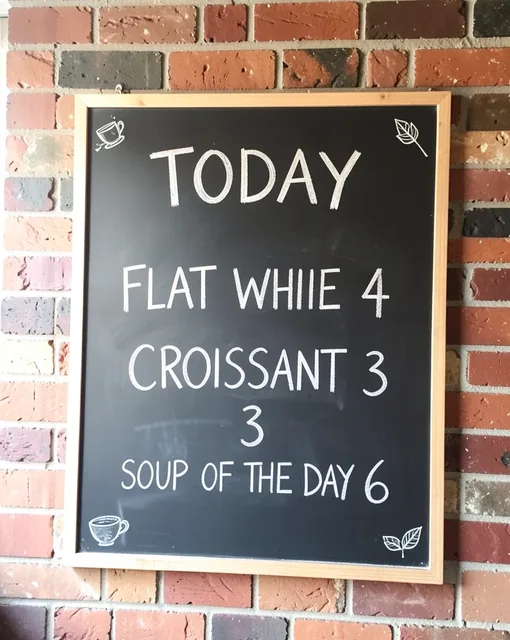
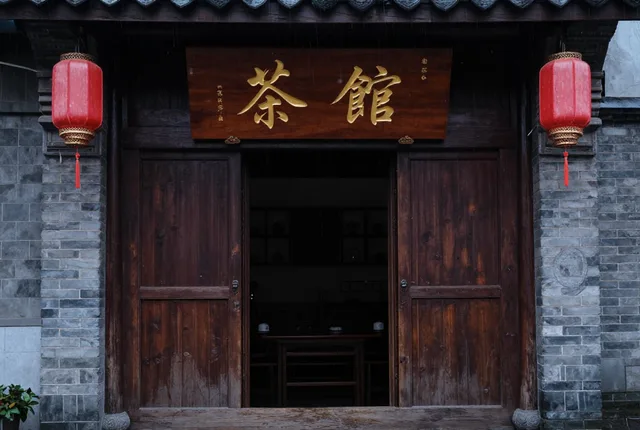
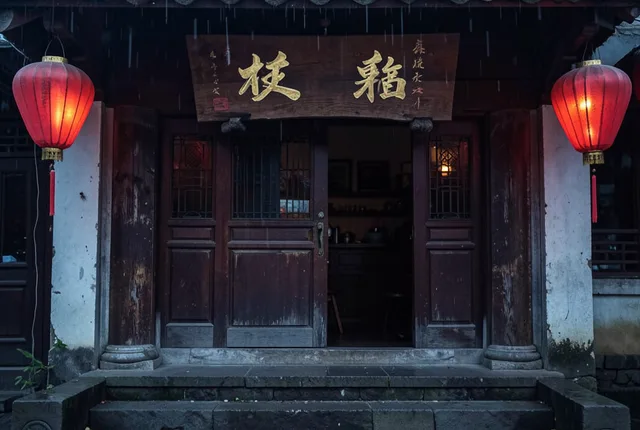
Text rendering
None of these developers publishes a text-rendering score we can compare directly, so here is what each one says about its own model:
- Z-Image Turbo: the card says it "excels at accurately rendering complex Chinese and English text". Its official prompt enhancer puts text to render in double quotes, word for word.
- Qwen-Image: the README describes it as achieving "significant advances in complex text rendering", especially for Chinese. The 2512 card lists improved text accuracy and layout over the August release. Qwen's rewrite guidance quotes every piece of visible text and describes its position, font, colour and size.
- FLUX.2 [klein]: both cards list as a limitation that rendered text "may be inaccurate or subject to distortion". BFL's FLUX.2 prompting guide says to put text in quotation marks and give its placement, style and size.
If posters, menus or UI mockups with lots of text are your main use, the developers' own positioning points to Qwen-Image first and Z-Image Turbo second. Test with your own copy, especially in languages other than English and Chinese, which none of them makes claims about.
Editing: Qwen-Image-Edit vs FLUX.2 klein
Z-Image Turbo doesn't edit. The Z-Image card announces a Z-Image-Edit model, but it's still marked "to be released".
| Qwen-Image-Edit-2511 | FLUX.2 [klein] 4B | |
|---|---|---|
| Model | Dedicated 20B edit model | Same 4B model as text to image |
| Reference images | A list; the Edit-2509 card says 1 to 3 work best | Up to 4 (BFL's FLUX.2 overview) |
| Card settings | 40 steps, true_cfg_scale 4.0, negative prompt " " | 4 steps, guidance 1.0 |
| Prompt help | Official edit-prompt enhancer that sees the input image | BFL's FLUX.2 prompting guide |
| VRAM (developer) | Not stated | About 13 GB |
| Licence | Apache-2.0 | Apache-2.0 |
The 2511 card lists what it improved over 2509: less image drift, better character and multi-person consistency, some popular community LoRA effects (lighting, new viewpoints) built in, industrial design generation and geometric reasoning. klein's advantage is that one small checkpoint covers both jobs, so you load one model instead of two.
[klein] 9B edits too, under the non-commercial licence, and the 9B KV variant is the one BFL positions for multi-reference editing.
Licence and VRAM
Z-Image Turbo, klein 4B, klein Base 4B, Qwen-Image-2512 and Qwen-Image-Edit-2511 are all Apache-2.0. klein 9B, 9B KV and Base 9B are under BFL's FLUX Non-Commercial License, which BFL says was renamed from the FLUX [dev] Non-Commercial License without material changes. For a product, that difference usually decides 4B vs 9B before anything else. The klein 4B card also points commercial open-weight users to BFL's usage policy and self-hosted terms, and asks that FLUX marks not imply endorsement.
On memory, klein 4B has two official figures: about 13 GB on the card and launch post, about 8 GB in the GitHub README. Z-Image Turbo fits in 16 GB. klein 9B needs about 29 GB. Qwen publishes no VRAM figure for 2512; its README points to DiffSynth-Studio, a community tool, for low-VRAM offloading. BFL ships FP8 and NVFP4 builds of every [klein] model, and says they use up to 40% and 55% less VRAM.
LoRA training support
- Z-Image Turbo: its family table marks Turbo as not fine-tunable. Train on Z-Image, the undistilled base, which its card positions for LoRA and ControlNet work. musubi-tuner's Z-Image docs recommend the base model now that it's out; before that, they pointed to a de-distilled Turbo from the ai-toolkit author.
- FLUX.2 [klein]: BFL's README says to use the Base models (50 steps) for fine-tuning and LoRA training. Base 4B is Apache-2.0; Base 9B is non-commercial.
- Qwen-Image: no distilled variant, so you train the released checkpoints. The README lists DiffSynth-Studio LoRA and full training as a community option.
Tool support covers all three. ai-toolkit lists Z-Image Turbo, Z-Image, FLUX.2 [klein] Base 4B and 9B, Qwen-Image, Qwen-Image-2512 and the Qwen-Image-Edit releases. musubi-tuner supports Z-Image, FLUX.2 [klein] and Qwen-Image.
Z-Image Turbo vs Z-Image base
| Z-Image Turbo | Z-Image (base) | |
|---|---|---|
| Steps | 8 | 28 to 50 |
| CFG | No (guidance 0) | Yes, 3.0 to 5.0 |
| Negative prompts | No | Yes, "strongly recommended" |
| Diversity across seeds | Low | High |
| Fine-tuning | Not intended | Intended base for LoRA and ControlNet |
| RL stage | Yes | No |
| Resolution | Demo presets up to 1536 × 1536 and 2048 × 1152 | 512 × 512 to 2048 × 2048 total area, any aspect ratio |
Same 6B architecture and licence. Use Turbo for fast, consistent output from a prompt; use the base when you need negative prompts, more variety between seeds, or a model to train on.
FLUX.2 klein 4B vs 9B: which to pick
- Licence: 4B is Apache-2.0; 9B is non-commercial.
- Memory: about 13 GB (RTX 3090/4070 and up) vs about 29 GB (RTX 4090 and up), per the cards.
- Text encoder: Qwen3 4B vs Qwen3 8B.
- Steps: both distilled to 4 steps; both Base versions run 50.
- Capabilities: the same. Both do text to image plus single and multi-reference editing.
- Variants: 9B adds a KV-cached version for multi-reference editing. Both sizes have FP8 and NVFP4 builds.
BFL's README recommends 4B for consumer GPUs. It makes no published quality comparison between the two that we could find, so if you're weighing them for non-commercial work, run both on your prompts.
In short: pick 4B if you'll use the images commercially or have a 16 GB card, since it's the only Apache-2.0 klein and the only one that fits there per BFL. Pick 9B for non-commercial work on a 24 GB-plus card where the larger text encoder is worth the extra memory, or 9B KV if you edit with several reference images. For Z-Image Turbo vs FLUX.2 klein specifically, the split is generation only (Turbo) against generation plus editing in one model (klein).
What about Qwen-Image-2.1 and FLUX.3 Image klein?
Both families had a newer release in autumn 2026.
Qwen-Image-2.1 (September 2026) has a 7B generation component, unifies text to image and editing (up to 10 references, masks, RGBA output) and lists 2048 × 2048 as its 1:1 size. It runs 40 steps; Qwen-Image-2.1-Turbo runs 8 with CFG 1. Against Z-Image Turbo it's closer in size than Qwen-Image-2512 and does more, but it's under the Qwen Research License: non-commercial unless you get a separate licence.
FLUX.3 Image klein (October 2026) is a 5.6B model with up to 10 references and bounding-box guidance. Its card runs the distilled model at 16 steps with no guidance and says to always use its separate 9B prompt upsampler. Peak memory on the card is 31 GB in BF16 at 1024 × 1024 without the upsampler. Its FLUX Kommunity License allows commercial output only for qualifying users under US$5M in annual revenue.
Which one to pick
- You need a commercial licence and fast text to image on a 16 GB card: Z-Image Turbo.
- You need generation and editing from one small model, commercially: FLUX.2 [klein] 4B.
- Your images carry a lot of text, or Chinese text, and GPU memory isn't tight: Qwen-Image-2512.
- You need instruction editing with a dedicated model, commercially: Qwen-Image-Edit-2511.
- You want negative prompts, seed variety or a base to train LoRAs on: Z-Image or FLUX.2 [klein] Base 4B.
- Non-commercial work and a 24 GB+ card: FLUX.2 [klein] 9B is open to you, and so are Qwen-Image-2.1 and FLUX.3 Image klein.
Our hardware requirements and commercial use pages put the published figures and licence conditions for each model in one table.
Trying them without a GPU
Z-Image Turbo and FLUX.2 [klein] 4B are live on Windpaint for text to image, at 1k in ten aspect ratios. Qwen-Image-2512 and Qwen-Image-Edit-2511 are in the catalogue as coming soon.
curl -X POST https://api.windpaint.ai/v1/generation/capabilities/image.generate \ -H "Authorization: Bearer $WINDPAINT_API_KEY" \ -H "Content-Type: application/json" \ -d '{"prompt": "a ceramic teapot on a linen tablecloth, soft window light", "aspect_ratio": "4:5"}'See the image generation docs for sizes and polling, and pricing for credits.
Sources
- Z-Image-Turbo model card
- Z-Image model card
- Z-Image GitHub README
- Z-Image-Turbo official demo code
- Qwen-Image GitHub README
- Qwen-Image-2512 model card
- Qwen-Image-Edit-2511 model card
- Qwen-Image-Edit-2509 model card
- Qwen-Image-2.1 model card
- Qwen-Image-2.1-Turbo model card
- FLUX.2 [klein] 4B model card
- FLUX.2 [klein] 9B model card
- FLUX.2 GitHub README
- BFL: FLUX.2 [klein] launch post
- BFL docs: FLUX.2 overview
- BFL docs: FLUX.2 prompting guide
- FLUX.3 Image klein model card
- ai-toolkit README
- musubi-tuner README
- musubi-tuner Z-Image docs
- musubi-tuner FLUX.2 docs
Questions.
Is FLUX.2 klein better than Z-Image Turbo?
It depends on the job. FLUX.2 klein 4B is smaller, runs 4 steps and also edits with up to 4 reference images. Z-Image Turbo is text to image only, but its card claims accurate English and Chinese text rendering, while the klein cards warn rendered text may be inaccurate. Both are Apache-2.0.
Qwen-Image vs Z-Image Turbo: which should I use?
Qwen-Image-2512 is a 20B model built for text rendering that runs 50 steps with CFG and supports negative prompts. Z-Image Turbo is 6B, runs 8 steps without CFG and fits in 16 GB. Both are Apache-2.0. Choose Qwen for text-heavy images if you have the GPU memory, Z-Image Turbo when you want fewer steps and less memory.
What's the difference between FLUX.2 klein 4B and 9B?
4B is Apache-2.0 and needs about 13 GB of VRAM per its card. 9B is under BFL's non-commercial licence, pairs with an 8B Qwen3 text encoder and needs about 29 GB. Both run 4 steps and support multi-reference editing.
What's the difference between Z-Image Turbo and Z-Image base?
Turbo is distilled to 8 steps with no CFG or negative prompts and isn't meant for fine-tuning. The base runs 28 to 50 steps with CFG 3 to 5, supports negative prompts, gives more variety across seeds and is the one to train LoRAs on. Both are 6B and Apache-2.0.
Can FLUX.2 klein edit images like Qwen-Image-Edit?
Yes. FLUX.2 klein handles text to image and image editing in one model, with up to 4 reference images per BFL's FLUX.2 overview. Qwen-Image-Edit-2511 is a separate 20B model dedicated to editing.
Is FLUX.2 klein 9B free for commercial use?
No. FLUX.2 klein 9B, 9B KV and Base 9B are under the FLUX Non-Commercial License. Only klein 4B and Base 4B are Apache-2.0.
Should I use FLUX.2 klein 4B or 9B?
Use 4B for commercial work or GPUs around 16 GB: it's Apache-2.0 and BFL's card puts it at about 13 GB. 9B is under BFL's non-commercial licence and its card says about 29 GB.